
How Bench Warrants Work in Montague County
Around Montague County, people say "bench warrant" loosely. The docket may use sharper words: arrest warrant, capias, capias pro fine, or FTA. The court's order controls, not the shorthand. So first figure out what was missed. Was it an appearance, a plea setting, a payment date, or a compliance deadline? Late payments don't all produce the same order. The issuing court keeps the case open and sets the path to resolve it. A Bowie ticket belongs to Bowie Municipal Court. A JP citation belongs to JP1 or JP2, while a misdemeanor in County Court and a felony in district court follow separate clerk paths. Ask for the case number and the exact label on the process. That label tells you which Montague County clerk to call.
Montague County Bowie FTA Warrants Cost $50
Bowie's official failure-to-appear page spells out what the city does. Miss a court date there, and the city says you may face a warrant plus a $50 fee per offense. The Class C warrant may enter a state criminal database, and any agency that confirms it can arrest you. Bowie directs people to Municipal Court before that happens. Remember, these are Bowie's terms, not a rule for every Montague County court. The city's court-schedule page adds that a matter must be on the scheduled docket, and same-day rescheduling is limited unless you post a cash bond. Read the city page and ask the clerk before acting. The Bowie FTA and warrant page holds the official local terms, and you can review Bowie Municipal Court's FTA instructions for that city's process.
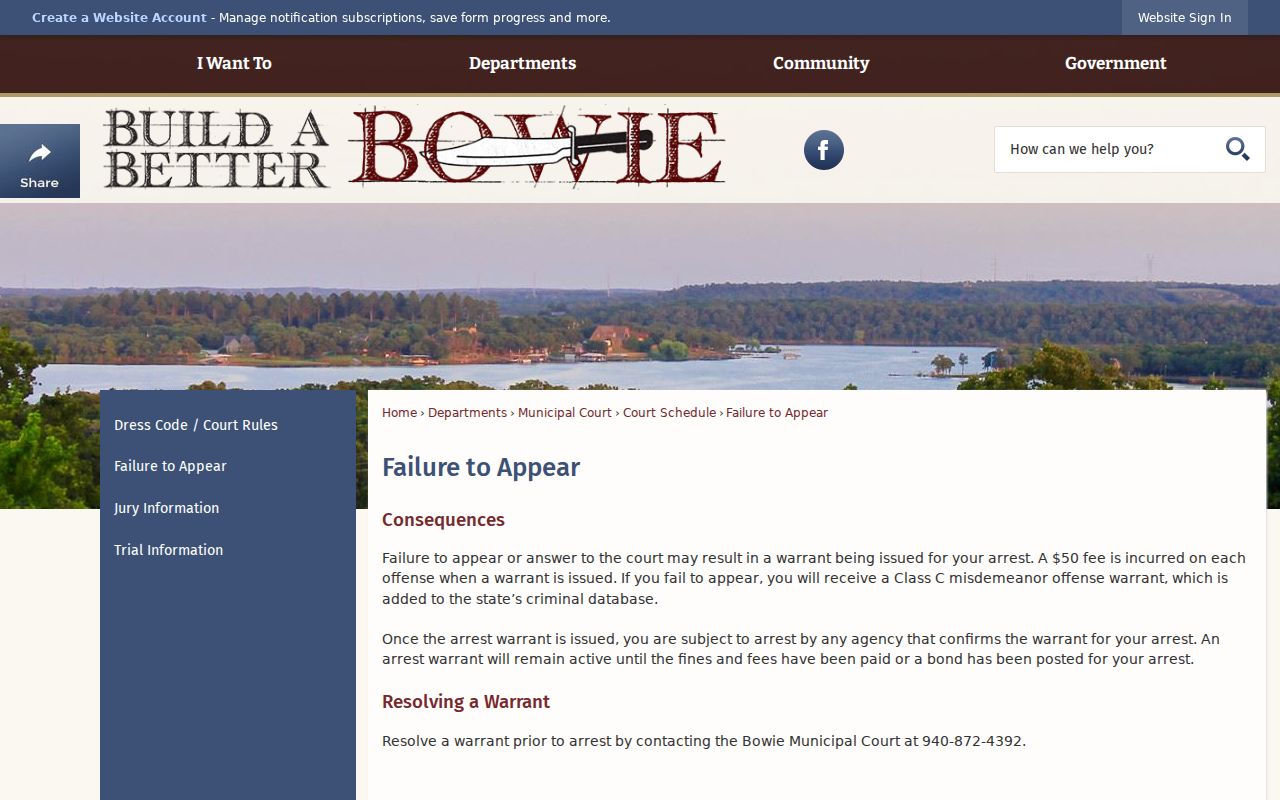
That official Bowie page documents the city's own guidance only. It does not describe every JP or municipal court in Montague County.
Montague County Bench Warrant Issuance
A missed appearance may prompt a judge to issue process. Montague County courts publish no countywide timeline, though. The JP or municipal clerk can say what was due, what order was entered, and whether a new setting is available. For municipal cases, the Texas Chapter 45A framework governs much of the process, including warrant, bond, capias pro fine, and service rules. A felony or County Court matter goes through that court's own clerk. Don't apply Bowie's docket scheduling detail to a District Court case. A warrant, capias, FTA notation, and judgment are distinct docket entries. Ask the clerk to read the current entry in plain terms so you know which one Montague County actually has on file.
Montague County JP Warrant Payment Rules
The two justice courts post different payment rules, and the details matter. JP1 requires the court or precinct, docket number, and amount. Online payment there counts as a no-contest plea and carries a 2.75 percent convenience fee. JP1 also warns that warrant recall may take until the next business day, and its page sets age limits, especially for defendants under 18. JP2 likewise requires a docket number and warns that payment is a no-contest disposition. It publishes no recall window at all, so call that clerk to ask when the docket and any other system will update. These court-specific limits are exactly why Montague County readers should not treat a generic payment link as a warrant status check. Compare the JP1 payment instructions with the JP2 instructions to see the difference yourself.
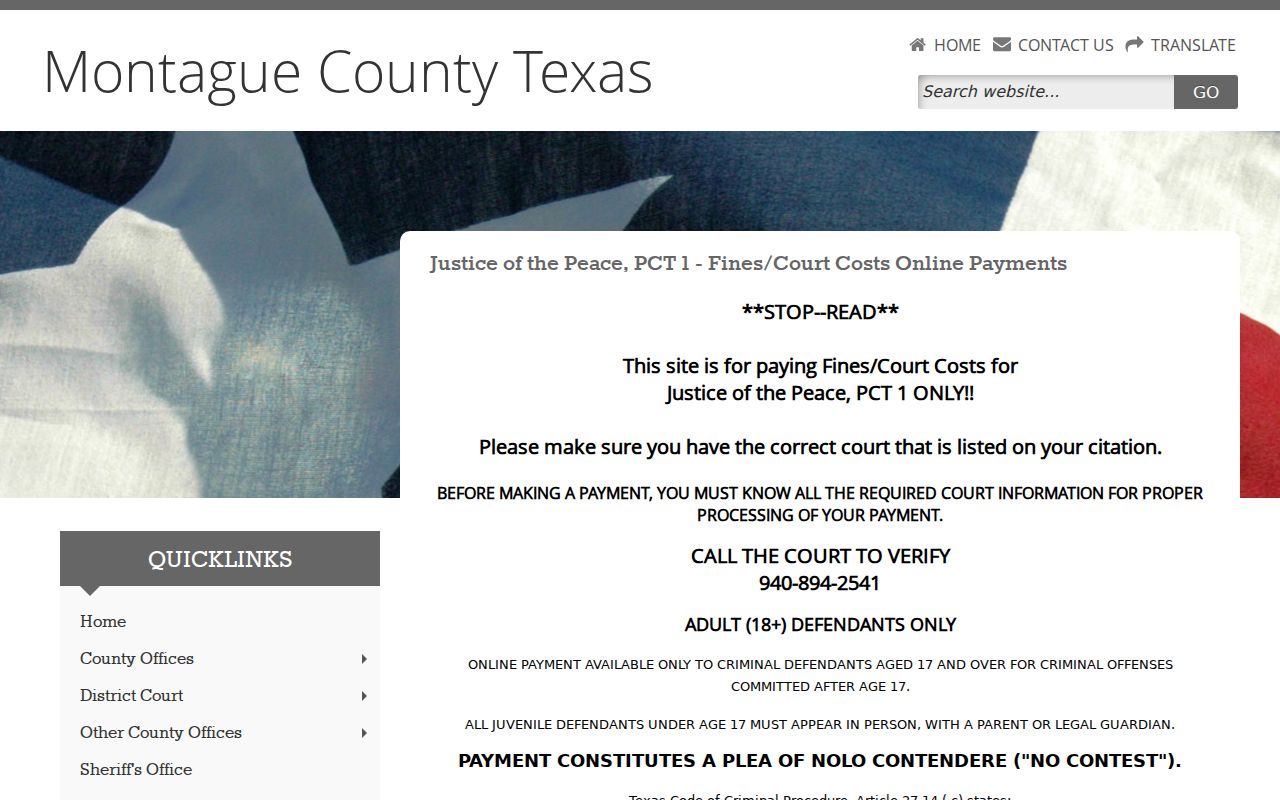
Check the relevant precinct page and confirm the current effect with its clerk.
How Bench and Arrest Warrants Differ
Montague County dockets can use similar words for different events. An arrest warrant begins with an accusation and a magistrate's order. A bench or FTA process follows a missed court obligation or order. A capias may arise at another stage, and a capias pro fine ties to fine enforcement. The court's exact label matters, so get it before you act.
| Process | Usual trigger | Ask the clerk |
|---|---|---|
| Arrest warrant | Magistrate order on an offense | Issuing case and current status |
| Bench or FTA | Missed setting or court duty | What event was missed? |
| Capias pro fine | Fine or judgment enforcement | Is a hearing, bond, or payment allowed? |
A Montague County docket may use a local term. Don't translate it into another court's rule without asking.
Montague County Docket Dates Change FTA Warrants
The docket calendar can matter more than an online payment button. Bowie says its court schedule controls when a matter may be reset, and same-day rescheduling is limited absent a cash bond. JP1 says recall may take the next business day after payment. Montague County's JP2 page makes no such timing promise. Before you act, ask what date was missed, whether the court will reset the case, whether a bond or motion is needed, and whether payment enters a plea. Keep your receipt. Then ask when the clerk expects the court file and any law-enforcement system to update, because those changes don't always happen at once in Montague County.
Clearing a Bench Warrant in Montague County
Resolution starts with the clerk who can see the docket. Ask whether the matter is a warrant, FTA entry, capias, capias pro fine, or just a payment balance. Then ask which options are open: a new setting, personal bond, cash or surety bond, full payment, a motion, or appearance with counsel. Montague County publishes no universal walk-in or surrender schedule.
Before paying: Confirm whether the transaction enters a plea, waives trial, or resolves only court costs. Ask when the court will recall process and when other systems should update.
A Texas attorney can explain the legal choices for a specific case. A Montague County clerk can confirm the docket and filing rules, but cannot give legal advice or promise an outcome.
Montague County Warrant Recall Times Differ
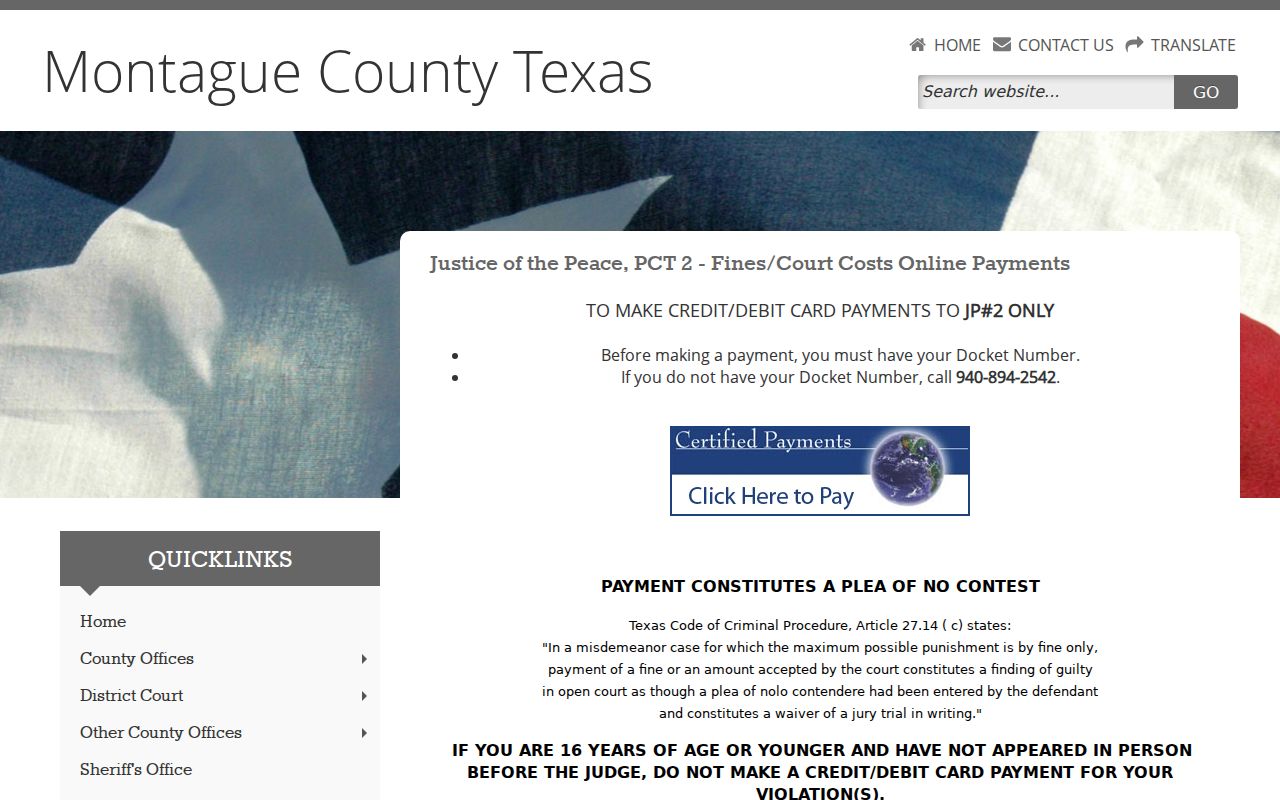
Timing on a warrant recall depends on which Montague County court holds the case. The JP1 payment page warns that a recall can take until the next business day. Bowie says a Friday payment posts the next working day. County Court and District Clerk pages describe next-business-day processing for specified costs, not for every warrant. JP2 publishes no recall window at all. Read the official JP2 payment page to see the docket and payment details, then call the clerk to confirm. A payment route is not proof that any case is cleared.
Keep the clerk's confirmation with any payment receipt or court order.
Montague County Courts That Issue Bench Warrants
Several Montague County courts can issue a bench warrant: the 97th District Court, the constitutional County Court, JP1, JP2, and three municipal courts. The live Texas court directory gives current judges and contact rows. The county's JP2 page has shown an older judge name than OCA, so confirm a disputed contact by phone.
Montague County Bench Warrant Terms
Use the word the Montague County court uses. Then ask what it means for that case. A "recall" is the court withdrawing or updating its process. "Quash" usually means an order setting the process aside. A bond is a release or appearance condition, and the court sets its type and amount. FTA stands for failure to appear.
- FTA
- A court entry for a missed required appearance or response.
- Capias
- Process used in circumstances set by Texas law; not always a fine-only writ.
- Capias pro fine
- Fine-enforcement process with court-specific procedures.
- Recall
- A court action that ends or updates the warrant record.
Montague County courts may label related events differently. Keep the citation, case number, and the clerk's wording together when you ask about next steps.