
How Arrest Warrants Work in Montague County
Texas law spells out what an arrest warrant is. Code of Criminal Procedure Article 15.01 calls it a magistrate's written order telling a peace officer to arrest someone and bring that person before the proper court. Article 15.02 sets the requisites, naming the offense and carrying the magistrate's signature. Montague County courts work inside that state process. One caution: do not confuse an arrest warrant with a traffic citation, a bench or FTA warrant, or a search warrant. Each is a different tool. The underlying case decides which Montague County court issued the order, and that answer tells you which record to request from the clerk.
Article 15.26 Gives Montague County a Clerk Route
Executed warrants have a paper trail. Article 15.26 makes the warrant and its supporting affidavit public information once the warrant is executed, on that statute's terms. The clerk must provide a copy during normal business hours, subject to other law and any required copy process. That rule covers executed warrants only. It creates no public search box for unexecuted warrants in Montague County. So come with specifics. Name the issuing court, the case number, and the date, then ask the clerk for the document that exists. A redaction, a sealed filing, a juvenile rule, or an investigative exception can limit what gets released. Read Code of Criminal Procedure Chapter 15 for the full warrant and access text the statute provides.
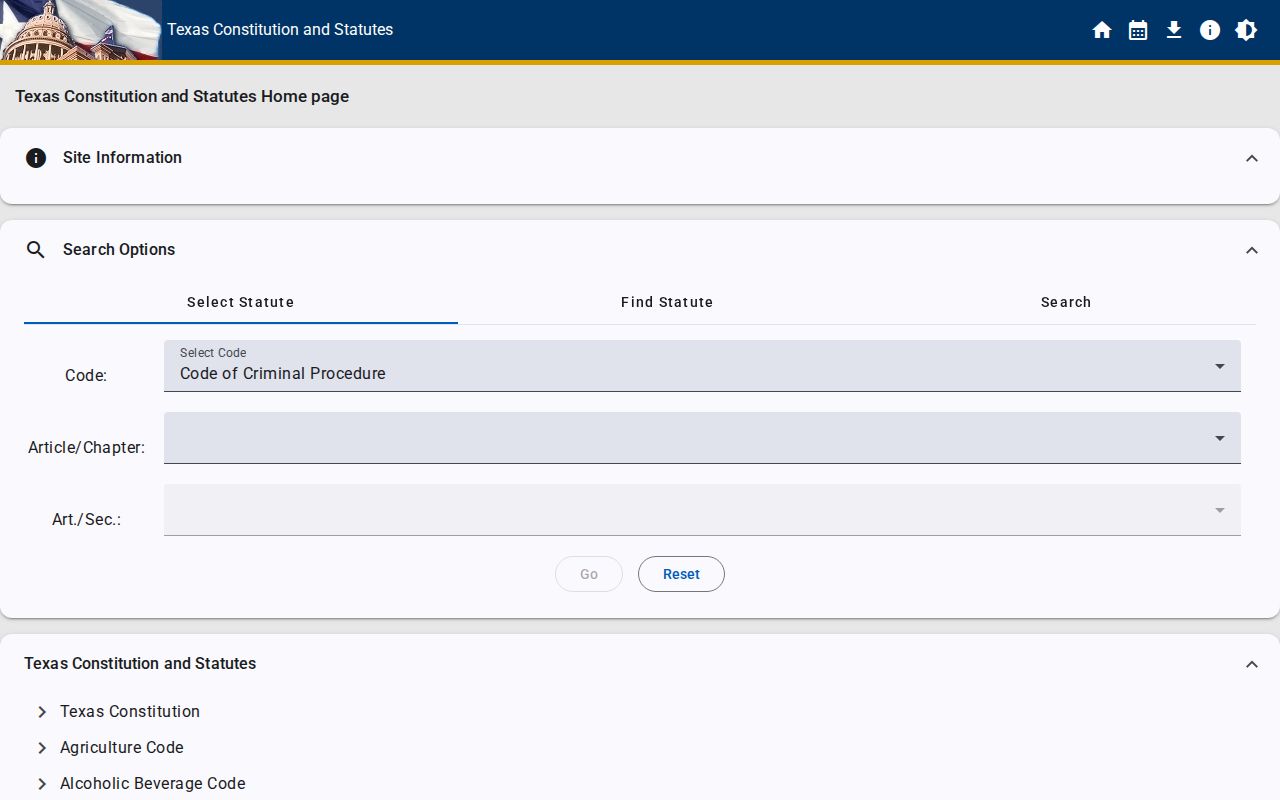
Use the statute to request one executed Montague County record, not to guess whether a live warrant exists today.
Arrest Warrants: What They Contain
A Montague County warrant file can hold a lot. Look for the issuing court, case number, charge, magistrate, issue date, and execution or return details. Later docket events may appear too. Some facts sit in a separate affidavit or case file instead. A public portal might show only a summary, not the full order. Ask the clerk what the file holds.
| Issuing authority | Court, magistrate, precinct, and signature or electronic issue record. |
|---|---|
| Person and offense | Name or description and offense stated in the process. |
| Dates and return | Issue, service, execution, and return entries when recorded. |
| Case follow-up | Bond, setting, payment, recall, or disposition if public. |
No record carries every field. A public summary is not the signed warrant, and it is not the court's current docket either, so weigh a Montague County search accordingly.
Montague County Municipal Officers Serve City Process
Chapter 45A lets a municipal peace officer or marshal serve municipal-court process under the statute. Bowie and Nocona each run police departments. Saint Jo's code has city police hauling city prisoners to the county jail. Sheriff's deputies and constables in Montague County perform peace-officer and process roles within their authority. One caveat matters. The serving office may lack the whole case file. For a city ticket or ordinance case, ask the municipal clerk what docket event occurred; for district or county cases, use the court clerk. Where someone is held never changes which court issued the process.
How Warrants Get Served in Montague County
Warrant service in Montague County can fall to the Sheriff, a constable, or city police tied to a municipal case. The Sheriff handles county patrol, court security, dispatch, arrests, and detention. Its public pages name no warrant-unit commander and post no warrant office hours. Assume no walk-in warrant desk exists.
Montague County Sheriff's Office
111 S Grand Street, Montague, TX 76251
940-894-2871
Call 911 for an emergency. For a non-emergency status question, phone the published Montague County office and name the case or court involved.
Montague County Sheriff Has No Warrant Roster
The Sheriff's official site posts a curated Most Wanted page and a Current Crime/tips page. What it does not offer is a complete, searchable Montague County warrant list, a status filter, or a public warrant-unit roster. A missing name proves nothing. A tip-page entry never replaces confirmation from the issuing court. Want a Sheriff report or another existing agency record instead? Use the Sheriff's written records-request route. The form asks for enough incident details to locate a record. It will not run a law-enforcement database query or create a new all-warrant list for Montague County.
Arrest Warrants, Summonses, and Bench Warrants
These Montague County records do different jobs. An arrest warrant tells an officer to arrest a person and bring them to court. A summons orders an appearance without that arrest command. Bench or FTA process follows a missed court duty. A capias and a capias pro fine carry their own Texas-law uses, so treat them as distinct from an initial arrest warrant.
| Record | What it does | Where to ask |
|---|---|---|
| Arrest warrant | Authorizes arrest under a magistrate's order | Issuing court and serving office |
| Summons | Directs a person to appear | Court on the notice |
| Bench or FTA process | Responds to a missed court obligation | Underlying JP, municipal, County, or District Court |
Juvenile and Child-Support Warrants Have Limits
Not every arrest-warrant file is an ordinary public case. Texas Family Code Section 58.010 keeps juvenile arrest warrants and supporting material confidential except through authorized routes. Child-support warrants run on Chapter 157 procedures and may pair a release hearing with a bond process tied to family court. Sealed, protected-person, or investigative records can also be withheld or redacted. Ask the right clerk how a lawful request is made. Do not publish a juvenile's name or push a general portal to expose a protected Montague County file. Texas Family Code Section 58.010 sets out the juvenile-warrant confidentiality rule in full.
Handling an Arrest Warrant in Your Name
Suspect a Montague County arrest warrant? Call the issuing clerk or a lawyer before you show up anywhere. Walking into a jail unannounced helps no one. When you reach the clerk, ask for the cause number, current process status, bond type and amount, any required appearance, and whether counsel or a motion is needed. The Sheriff posts no universal surrender procedure or bond-window schedule.
Confirm first: A court clerk can explain the docket route. Get legal advice about surrender or bond, and do not rely on a payment page as proof that process is recalled.
Hold onto your receipt, bond paper, or court order. Ask the Montague County clerk when other systems should catch up, and call 911, not a records request, if anyone is in immediate danger.
Federal Warrants Use Wichita Falls
Federal cases from Montague County land in the Wichita Falls Division of the Northern District of Texas. The federal venue listing shows that assignment. A federal docket never surfaces through the County Clerk, the JP portals, or the Montague Sheriff tip pages. For dockets, PACER is the official federal case-access system. Fees and access rules apply, so review PACER account, fees, and access information before you run a search. Some federal complaints and warrant material stay sealed, and a blank PACER result is not warrant confirmation. Ask counsel or the federal clerk about access. No Montague County court can settle a separate federal matter.
PACER covers federal fees, not a Montague County case result. For Montague County's division, check the federal court's venue listing.
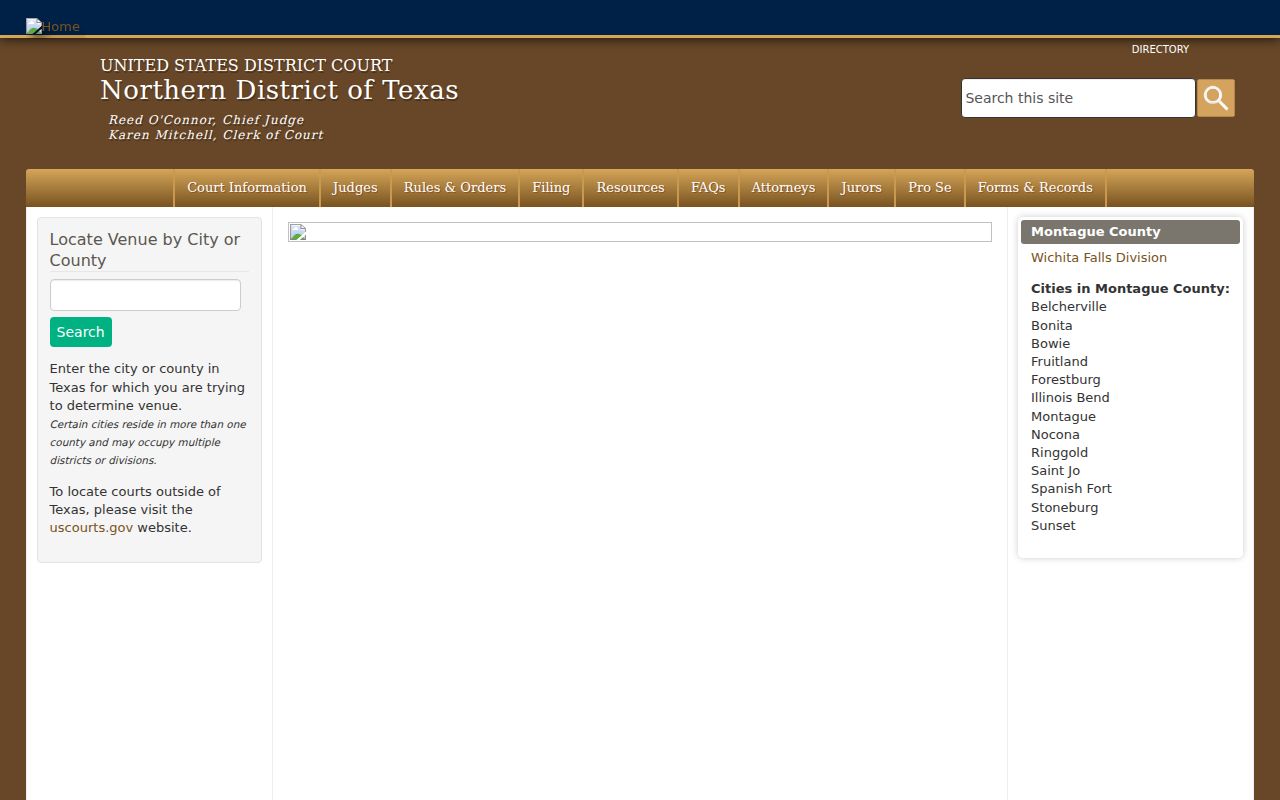
Venue information routes federal questions; it does not expose sealed files or warrant status.